Today, impressionistic landscape paintings are among the most widely known and appreciated works of art ever created. However, just before the birth of impressionism in France, there was an important shift toward the acceptance of landscape as a subject in and of itself. Grand, large-scale realist landscapes, by a group of respected naturalist artists, were finally becoming accepted as a worthwhile painting subject. Painted in meticulous realism, with the revolutionary new focus on the changing times of day and the effects of light on the landscape, these highly accomplished tonalist works, and the group of artists who created them, would later become known as the Barbizon School of painters. What occurred in the 1820s to 1860s in the Forest of Fontainebleau and the charming village of Barbizon, just south of Paris, would shape the French art world and even French culture, and later the grand American landscape paintings that we know and love today.
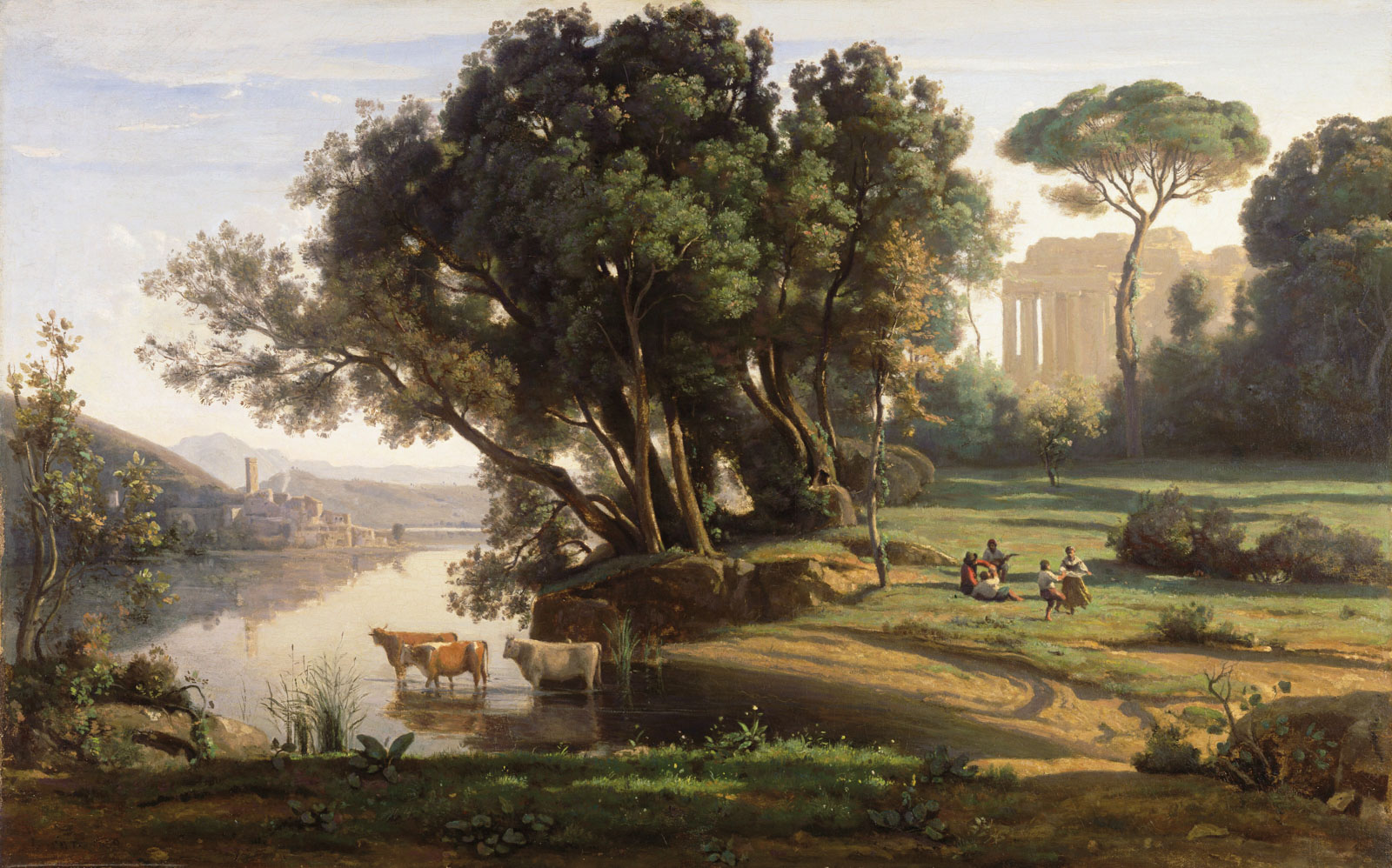 Jean-Baptiste-Camille Corot (French, 1796-1875), Italian Landscape (Site d’Italie, Soleil Levant), ca. 1835. Oil on canvas, 29 x 357/8 in. Image courtesy Getty Museum.
Prior to this time in France, landscape art was not taken seriously. They merely served as the background for figurative scenes or portraits. It was never considered a genre it itself by the rigorous jury of the French Academic Salon exhibition, the largest annual juried art exhibition, then held at the Louvre. It was imperative for artists to have their work accepted into the prestigious exhibition, but the Salon had strict criteria. Its focus was highly refined realism, and specific subjects and techniques that adhered to their rigid standards. The most influential fine art school, the École des Beaux-Arts, and its many independent atelier schools, emphasized classical realism. Subjects were usually Romantic in nature, featuring scenes from legends and myth or grandiose depictions of people of import. Artists emblematic of this style of classical realism include Henri Fantin-Latour, Camille Corot, Jean-François Millet, among others. As a landscape on its own was not yet considered fine art, figures had to be the central subject for it be worthy of being juried into the Salon.
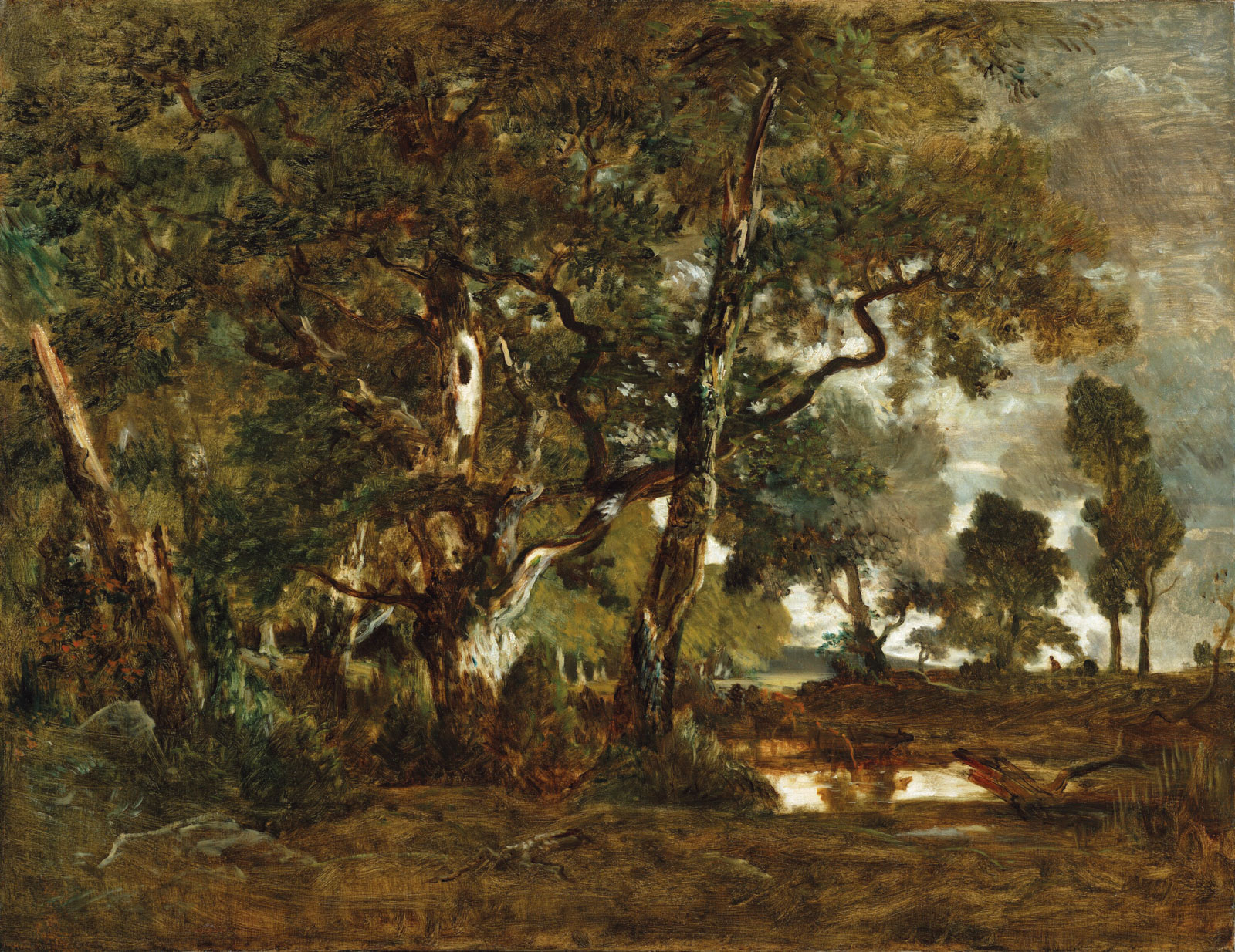 Théodore Rousseau (French, 1812-1867), Forest of Fontainebleau, Cluster of Tall Trees Overlooking the Plain of Clair-Bois at the Edge of Bas-Bréau, 1849-1852. Oil on canvas, 35¾ x 46 in. Image courtesy Getty Museum.
When the Paris academy schools and studios closed for spring or summer break, many of the students headed south to the French countryside and the increasingly popular region of Fontainebleau. The forests were known as a landscape painter’s paradise, with rolling hills, small villages and the Fontainebleau castle. A group of painters often gathered in the town of Barbizon, where they did some of the first plein air, on-location paintings and studies that they would use as reference for larger and more-refined studio works. Artists such as Charles-François Daubigny, Théodore Rousseau and Millet, all of whom had exhibited works in the Salon and were respected in the art world, had moved to villages in the area in the first part of the century. They did not adhere to strict Romanticism or the styles endorsed by the Salon. Rather they adopted the sentiment of Jean-Jacques Rousseau: “To hell with the civilized worlds, long live nature and old poetry!” Their affinity for nature was in stark contrast to the cosmopolitan life in Paris.
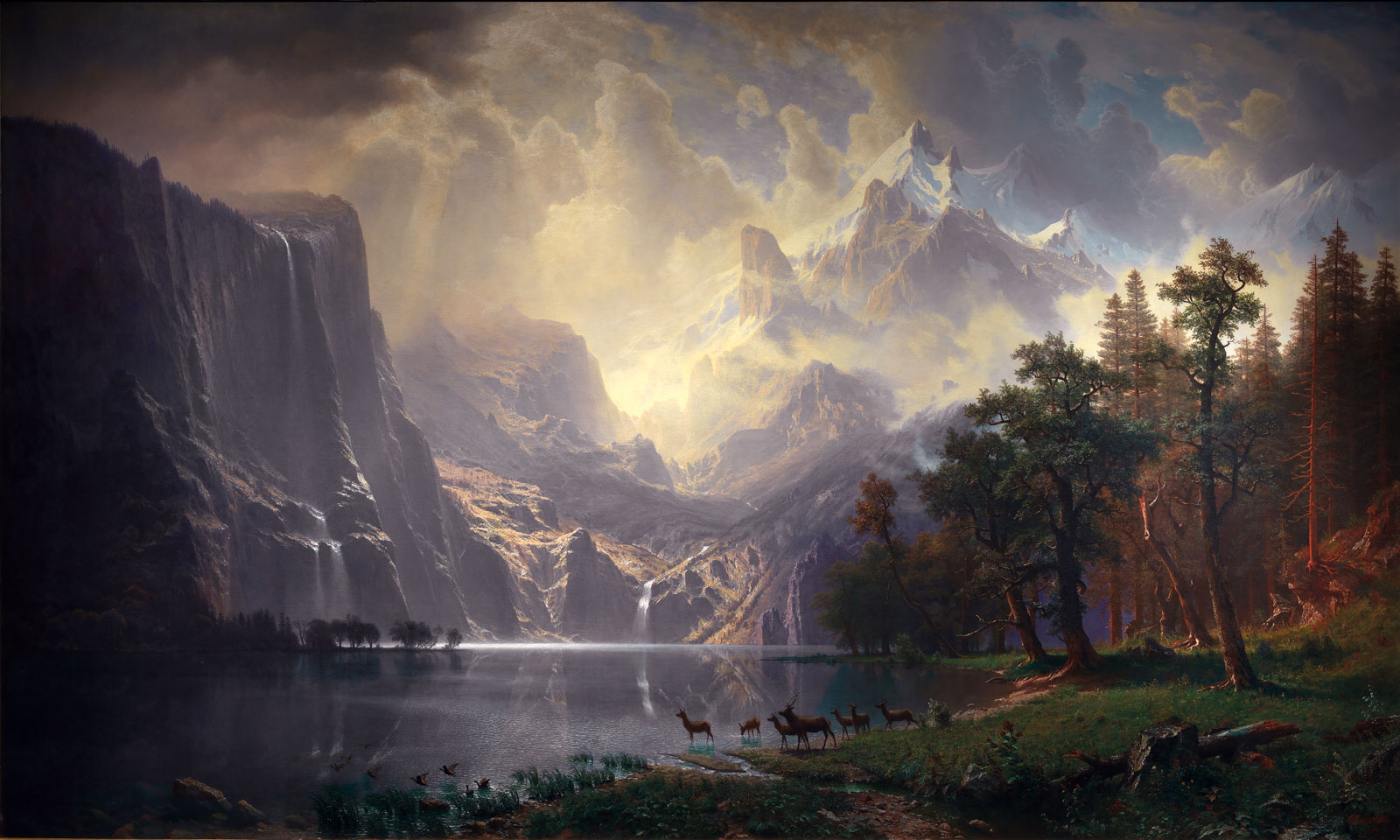 Albert Bierstadt (1830-1902), Among the Sierra Nevada, California, 1868. Oil on canvas, 72 x 120 in. Image courtesy the Smithsonian American Art Museum.
This group, later referred to as the Barbizon School, often painted on location from life, with a focus on expressing their feelings and the effects of light. Their aim was to paint the landscape in a realist style but prove it to be a worthy subject in its own right. Painting bucolic scenes of everyday life like peasants and farm animals, these naturalist artists were inspired by 17th-century English and Dutch painters who approached their subject with careful observation and a profound love of nature. They aimed to convey their spiritual attitudes towards nature, rather than a facsimile of the scene and elevate the landscape into the realm of fine art.
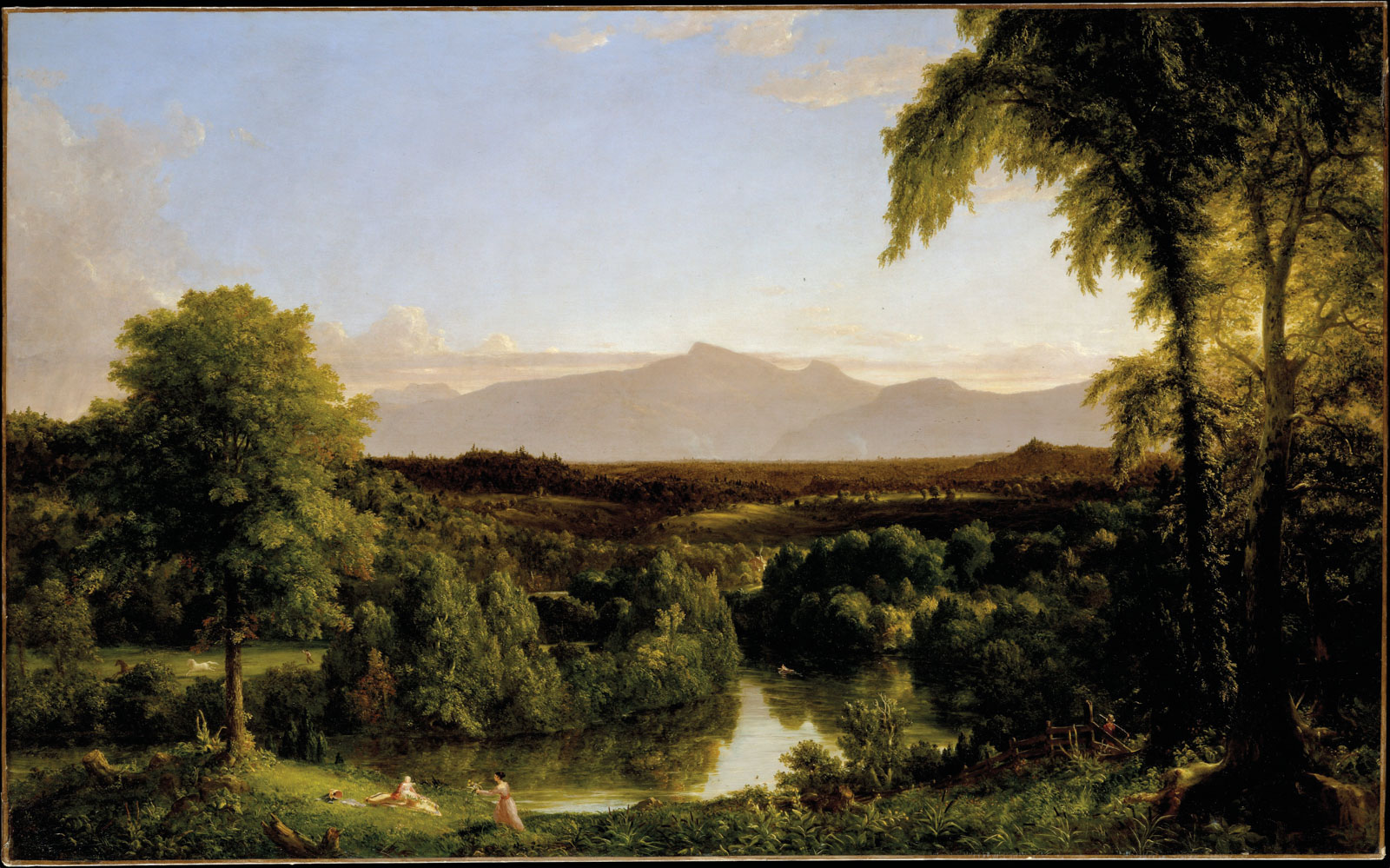 Thomas Cole (1801-1848), View on the Catskill—Early Autumn, 1836-1837. Oil on canvas, 39 x 63 in. Gift in memory of Jonathan Sturges by his children, 1895. Image courtesy The Met.
The magnificent forest was filled with stags, wild boars, rugged peaks, farmers, small hamlets and acres of dense forest that many believe was enchanted. Hundred-year-old towering trees moved in the dappled and brilliant atmospheric light—there was no shortage of inspiration. In 1849, a railway line made the area a popular destination for weekend jaunts. The new accessibility of the countryside transformed the relationship between urban mankind and the natural world. Writers and artists went back to their roots, quite literally, escaping the city. The royal court had even started to spend springtime at the Chateau Fontainebleau and picnics in the woods were all the rage. It is said that Napoléon III, an avid art lover and collector, even attended an art show in the area and bought a painting for Empress Eugénie de Montijo. Famous writers like Gustave Flaubert and George Sand started to come to the region and even wrote novels about the lives of painters in the forest. Painters from Switzerland and many from America flocked to the area. Art critic Jules-Antoine Castagnary wrote about “the great army of landscape painters” invading France.
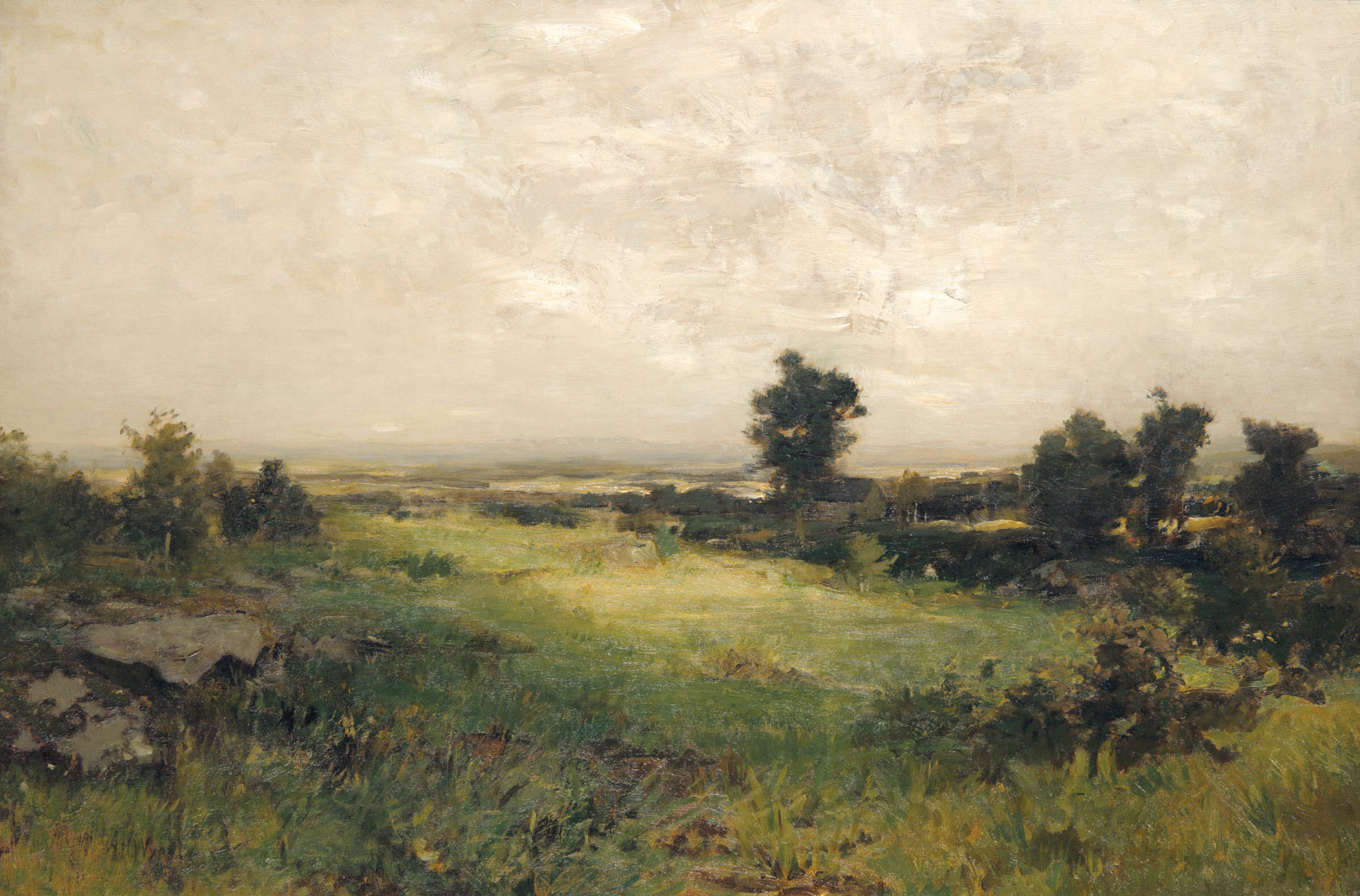 Alexander H. Wyant (1836-1892), Housatonic Valley, ca. 1880-1890. Oil on canvas, 24 x 36 in. Image courtesy Smithsonian American Art Museum.
The increasing popularity of the genre eventually wore down the Salon jurors’ resistance to showing pure landscapes and, despite much controversy, finally conceded and accepted these works into the show. (It might have helped that Barbizon artist Daubigny also sat on the jury). It was also a time when France was trying to reinvigorate its sense of patriotism post-revolution and celebrating the beauty of the French landscape was another way to do so. Napoléon III perhaps saw these grand landscapes as a celebration of his country.
This renewed appreciation for landscape in France aligned with the Westward Expansion happening in America, and the discovery of the grand landscapes and wilderness that were painted, leading to the establishment of many of the country’s National Parks, a source of national pride.
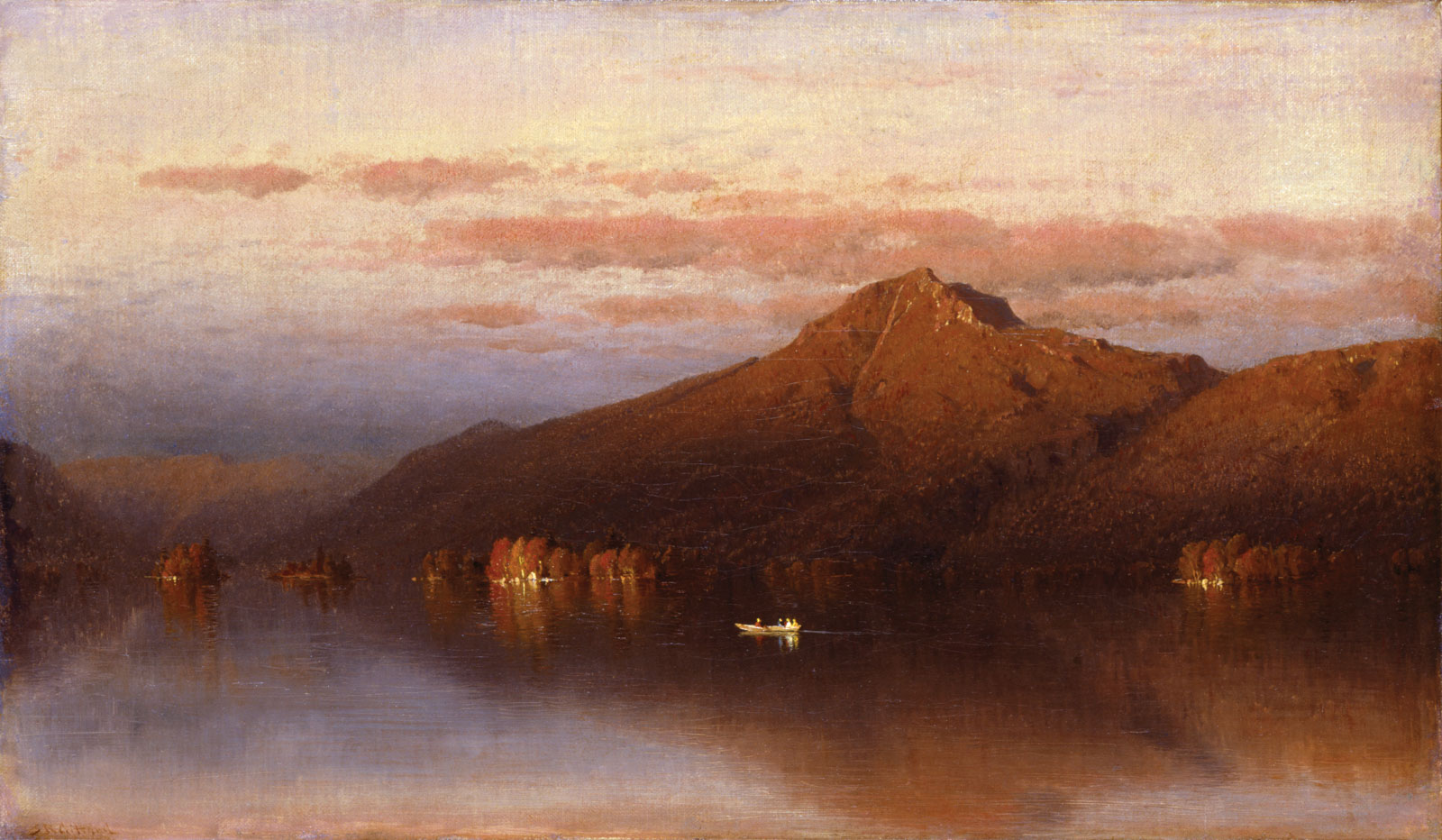 Sanford Robinson Gifford (1823-1880), Whiteface Mountain from Lake Placid, 1866. Oil on canvas, 11 x 19 in. Image courtesy Smithsonian American Art Museum.
The influence of the French Barbizon group with all its ideals on the American schools of painters is immeasurable. Important American artists had visited and painted in France, officially igniting the American equivalent, and giving birth to the famed Hudson River School. Renowned American landscape painters Thomas Cole, Georges Inness, Homer Dodge Martin, Alexander H. Wyant, William Morris Hunt, Wyatt Eaton and Thomas Moran had all spent time studying in France, and were directly inspired by the French artists as well as the awe-inspiring beauty of the Forest of Fontainebleau, and the quaint village of Barbizon. Wyatt and Hunt actually lived in Barbizon, near Millet, as did William Babcock.
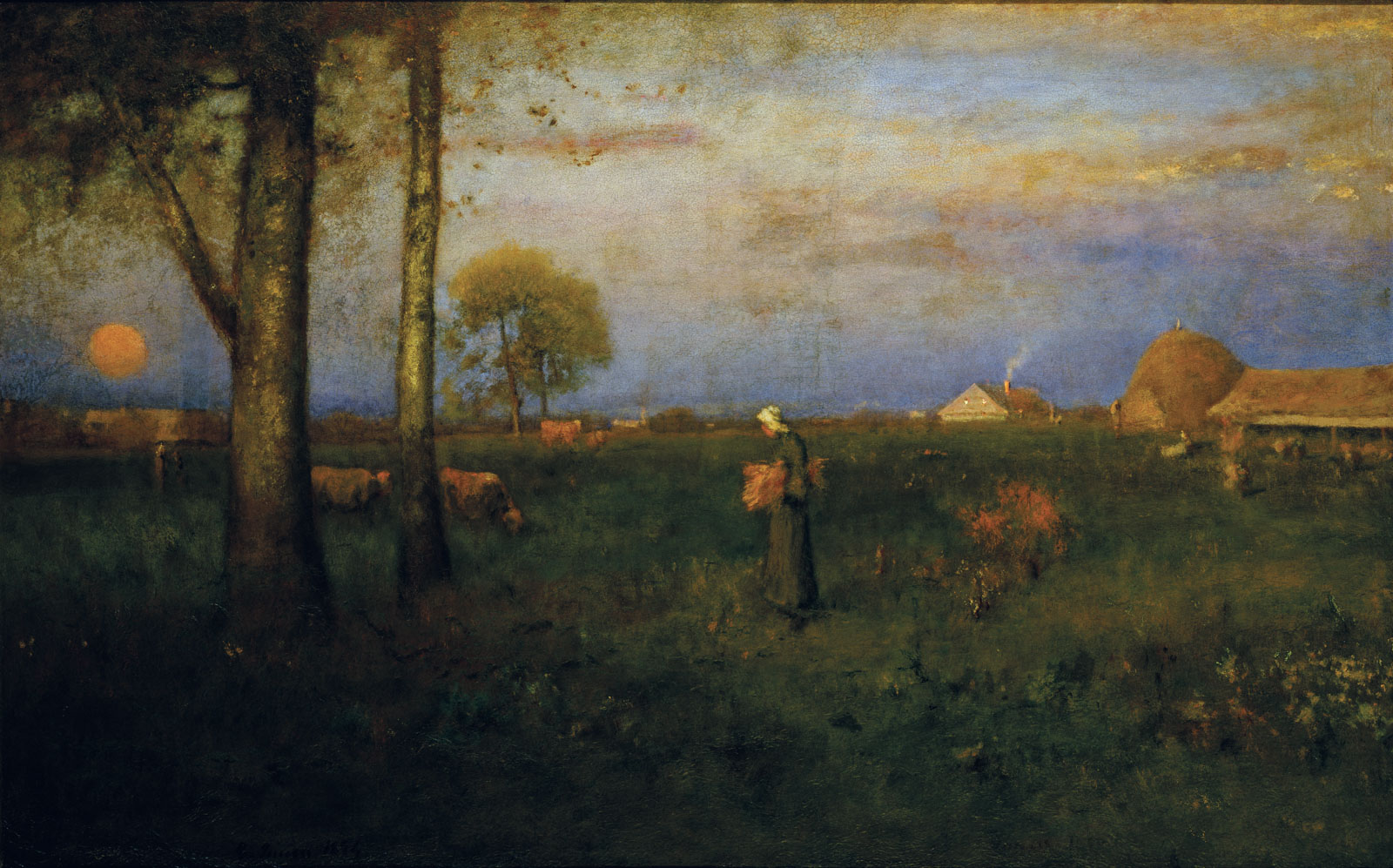 George Inness (1825-1894), Sundown, 1884. Oil on canvas, 30 x 34 in. Image courtesy Smithsonian American Art Museum.
Hunt had studied under French artist Thomas Couture in Paris from 1846 to 1852 and was so inspired by seeing Millet’s The Sower at the Paris Salon of 1851 that he spent the next two years in Barbizon to paint by the artist’s side. Hunt remains the American artist most closely connected to the French Barbizon movement and in the years that followed inspired artists at home in New England.
Works by Hunt, Inness, Martin and Wyant were the origins of the American Barbizon movement which closely followed the traditions of the French Barbizon. Much of the American subject matter before this time revolved around portraits of wealthy patrons or heroic battle scenes approved by the National Academy of Design. The young artists had brought the ideals and techniques back with them from France—painting the natural world, and capturing light effects in a soft tonalist style. Wyoming’s Grand Tetons, the Grand Canyon, Yosemite, Yellowstone and New York’s Hudson Valley became favorite subjects of the artists.
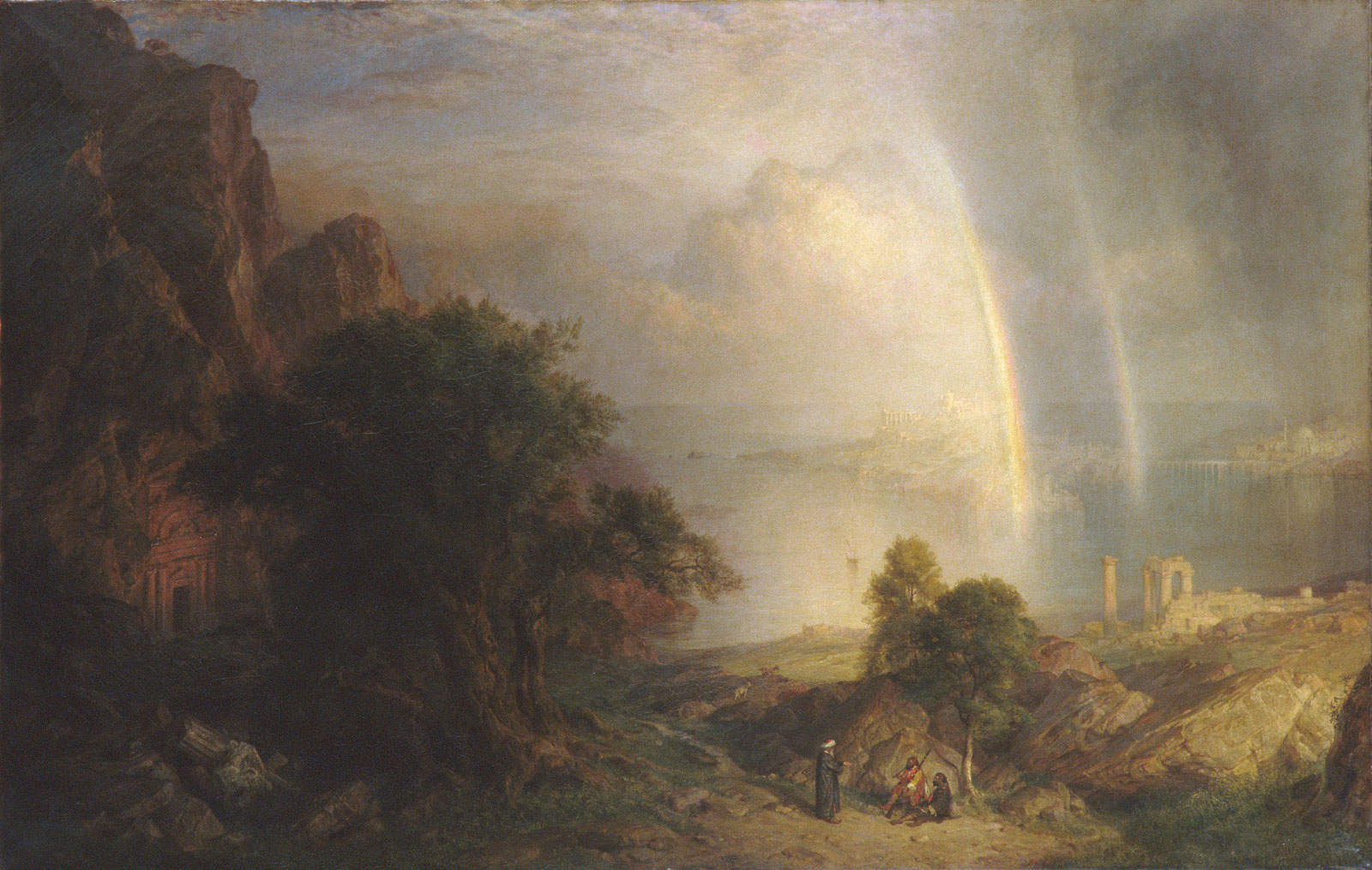 Frederic Church (1826-1900), The Aegean Sea, ca. 1877. Oil on canvas, 54 x 84¼ in. Bequest of Mrs. William H. Osborn, 1902. Image courtesy The Met.
The Hudson River School, whose members created works that became definitive of American art, existed from 1850 to the end of the Civil War, reaching its peak around 1875. Celebrated American artist Thomas Cole was known for his scenes of the Catskill Mountains and the Adirondacks in Upstate New York. He had many disciples that followed his style that combined his American and French influences. Famed American landscape artists Frederic Church, Albert Bierstadt, Sanford Robinson Gifford and Jasper Francis Cropsey all linked their new style of landscape paintings to French Barbizon origins. Artists Henry Ward Ranger and Carleton Wiggins compelled artists to move to Old Lyme, Connecticut, where they began to create their own “American Barbizon” groups and colonies. Their work directly echoed the French landscape artists, portraying grazing farm animals as well as vast expanses and manual laborers, albeit without hardship, tending toward more poetic, calming scenes.
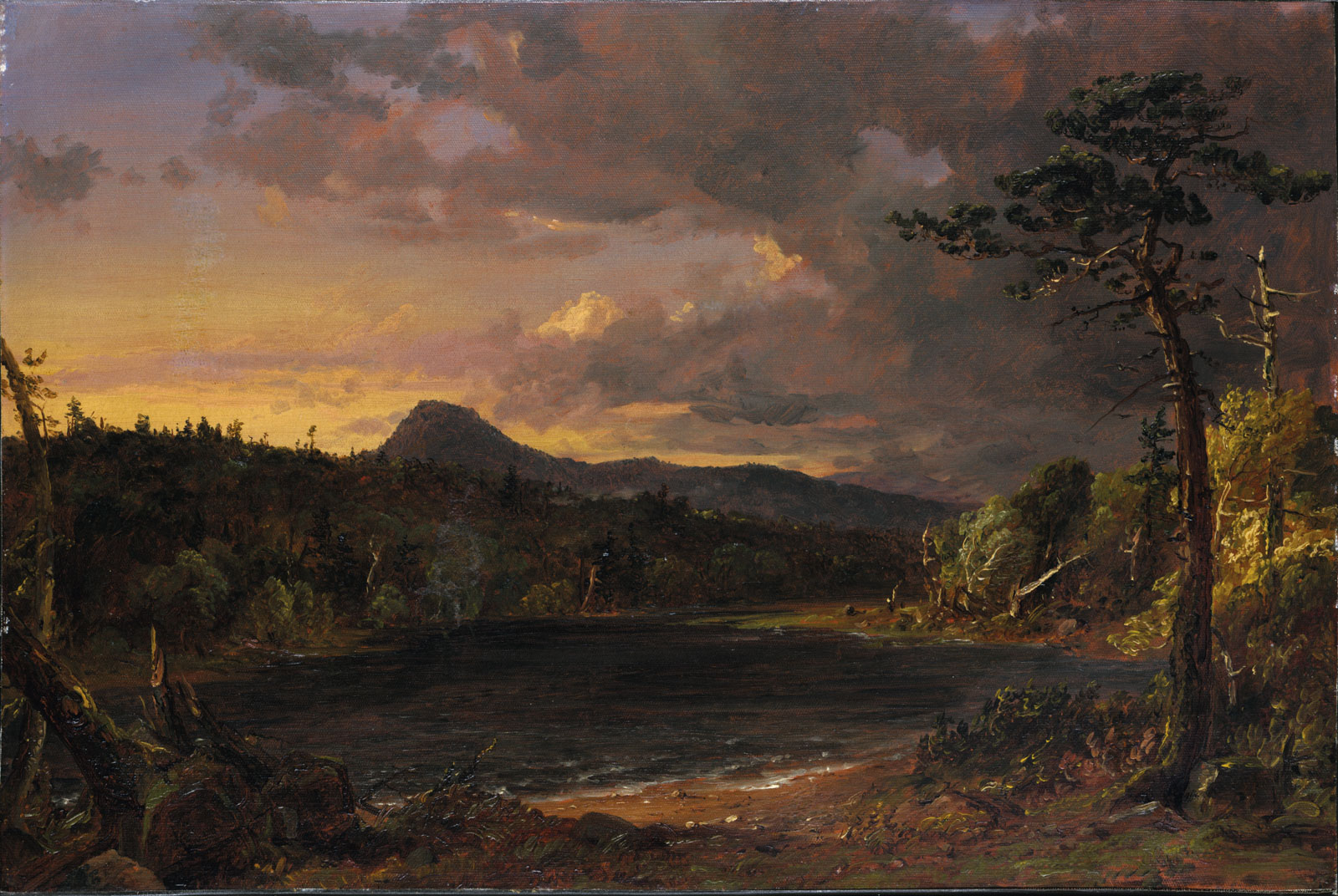 Jasper Francis Cropsey (1823-1900), Catskill Creek, 1850. Oil on canvas, 18 x 27 in. Image courtesy Smithsonian American Art Museum.
These tonalist American Barbizon and Hudson River Valley School works became highly popular with collectors in the late-19th century in America, which then inspired more American artists to adopt the style and travel to France, spreading the movement across the United States. Artists on both sides of the Atlantic created work that boasted a combination of plein air painting and studio work, applying a distinctive “foggy” aesthetic sometimes referred to as “impressions” to realist scenes of everyday life. Not surprisingly, many of these initial techniques and subjects later evolve into the art genre of Impressionism.
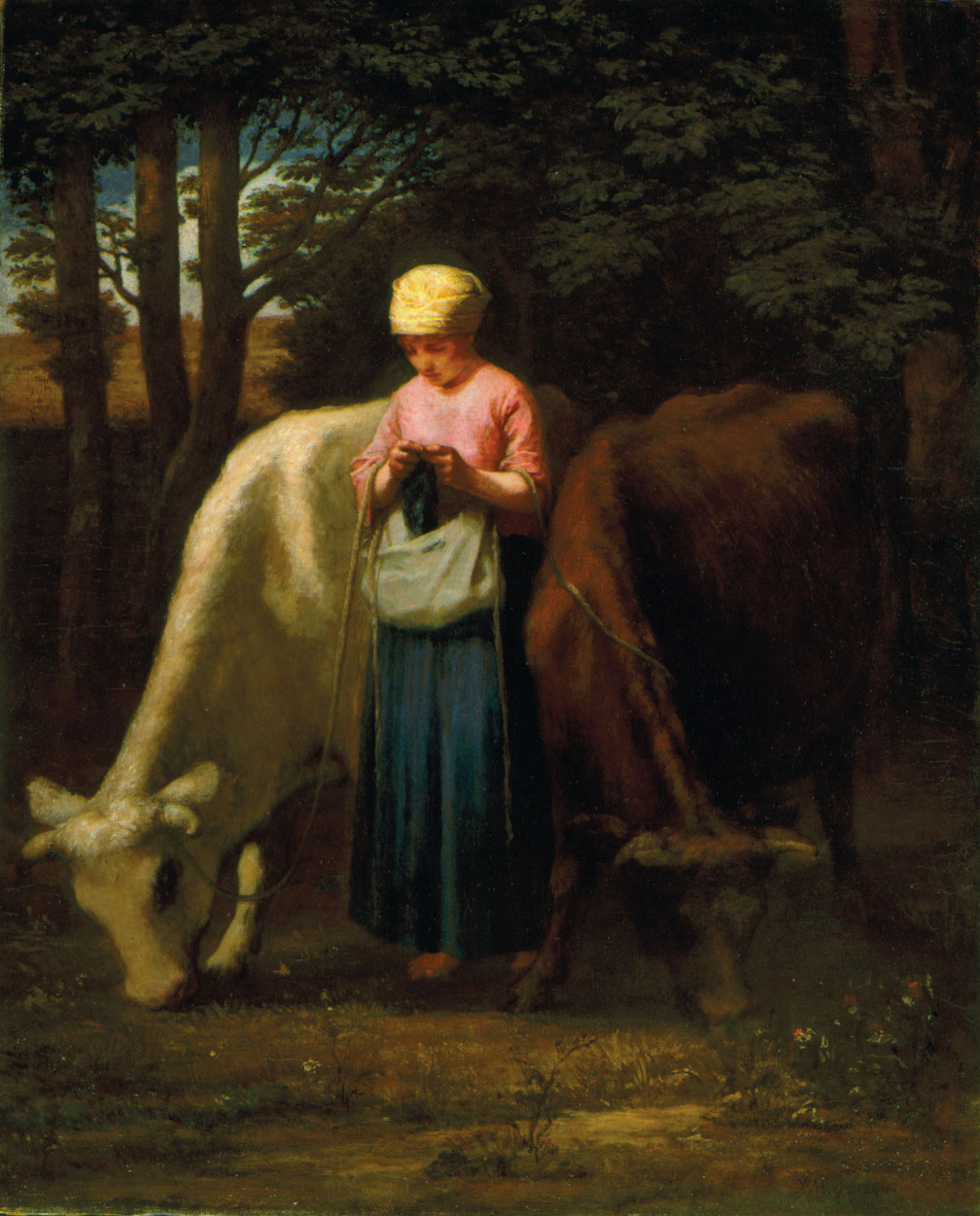 William Morris Hunt (1824-1879), Girl with Cows, 1860. Oil on Canvas, 317/16 x 251/2 in. Image courtesy Los Angeles County Museum of Art.
Indeed, the French artists of the Fontainebleau forest and their revolutionary subjects and techniques had made an important and lasting mark on American Art. The American Barbizon, known for their grand-scale landscapes with atmospheric splendor remain some of our most valued national treasures, rightly taking their place on the most prominent walls of many of the top museums in America and beyond.
Powered by Froala Editor